WAEC Nigeria HNO Dangut Reveals Biggest Regret as He Exits Office
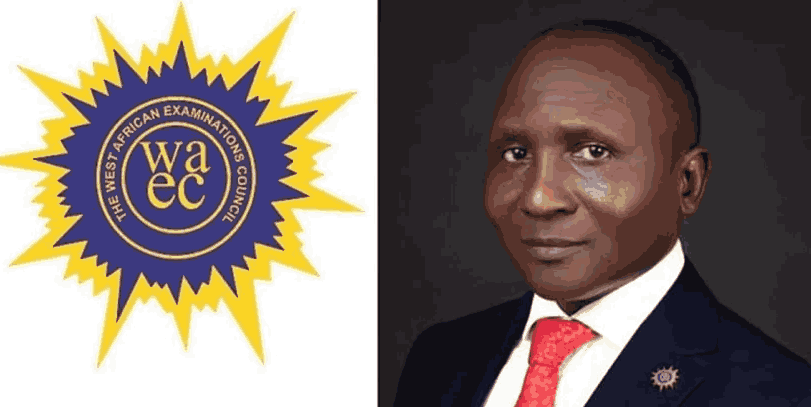
The outgoing Head of the National Office (HNO) of the West African Examinations Council (WAEC) Nigeria, Dr Amos Dangut, has identified resistance to the council’s transition from paper-based examinations to computer-based testing (CBT) as his biggest regret in office.
Dangut disclosed this during a media question-and-answer session in Lagos, where he also announced the release of the results of the 2026 May/June West African Senior School Certificate Examination (WASSCE).
The announcement marked one of Dangut’s final major assignments as WAEC Nigeria HNO. He assumed the position on October 2, 2023, succeeding Mr Patrick Areghan, after joining WAEC in 1998 as an Assistant Registrar II and rising through various positions within the organisation.
Reflecting on his tenure, Dangut said WAEC faced significant resistance from members of the public and other stakeholders as it began moving away from the traditional pen-and-paper examination system.
“When WAEC introduced the CBT examinations and started the migration from the traditional pen-and-paper mode, there were suspicions that it would not work. People objected to it.”
He explained that WAEC responded to the concerns through extensive media campaigns and engagements with stakeholders to educate the public about the benefits and operation of computer-based examinations.
Students preparing for WAEC WASSCE, and GCE examinations can strengthen their preparation through structured practice here → Download ExamGuide
However, Dangut said resistance to the transition remains evident in some quarters, describing it as a reluctance driven largely by fear of change.
“Until today, we still have people saying no to the shift. It is a reluctance rooted in the fear of change. I regret that we are still clinging to our traditional methods of examination. Nothing is permanent in life; computer-based testing is the future.”
The outgoing HNO also spoke about WAEC’s ability to conduct examinations for a large number of candidates within a limited period while ensuring the timely release of results.
A total of 1,950,726 candidates sat the 2026 May/June WASSCE. Of the number, 1,200,514 candidates, representing 61.54 per cent, obtained credits and above in at least five mandatory subjects, including English Language and Mathematics.
Are you preparing to sit for WASSCE? Download and study with the ExamGuide SSCE Practice App to pass the exam in one sitting. Download from www.examguide.com/offline/products/ssce
The figure represents a slight decline from the 62.96 per cent recorded in the previous year.
On the council’s target of conducting examinations for nearly two million school candidates within a six-to-eight-week period and releasing results within 45 days, Dangut said WAEC’s service delivery would continue to evolve.
“WAEC did not start by releasing results within 45 days after the last paper; it used to take much longer. We will continue to improve our service delivery, even though 45 days is not our rigid benchmark. With the innovations we are putting in place, the era of traditional pen-and-paper examinations is gradually coming to an end.”
Dangut further explained that the transition to CBT is part of a broader policy direction by the Federal Government, while WAEC’s responsibility is to ensure that the implementation of the digital examination system is effective.
He described computer-based examinations as having significant advantages over the traditional system, particularly in reducing opportunities for examination malpractice and improving the security of examination materials.
“CBT exams have far more advantages than disadvantages. It is cost-effective in the long run and will drastically minimise malpractice. The digital mode eliminates hardcopy question papers, which removes the risk of questions being leaked during printing or compromised in transit.”
According to Dangut, the elimination of physical question papers would address one of the vulnerabilities associated with the traditional examination system, including the potential compromise of examination materials during printing and transportation.
Are you preparing to sit for WASSCE? Download and study with the ExamGuide SSCE Practice App to pass the exam in one sitting. Download from www.examguide.com/offline/products/ssce
He, however, stressed that the success of the transition would depend on the collective efforts of all stakeholders, particularly the government.
Dangut maintained that sustained investment, cooperation, and acceptance of digital examinations would be necessary to ensure a smooth transition and strengthen the credibility and efficiency of public examinations in Nigeria.
No comment found
Related Posts

WAEC WASSCE Theory Questions: How to Write Answers That Earn Full Marks

How to Prepare for WAEC WASSCE English: Essential Tips for Comprehension and Essays

What is the Difference Between NABTEB and WAEC WASSCE? Which Exam Is Right for You?

WAEC Announced WASSCE for Private Candidates 2026 Second Series Final Timetable
WAEC Issues Urgent Advisory to Students Over Remita Payment Problems