

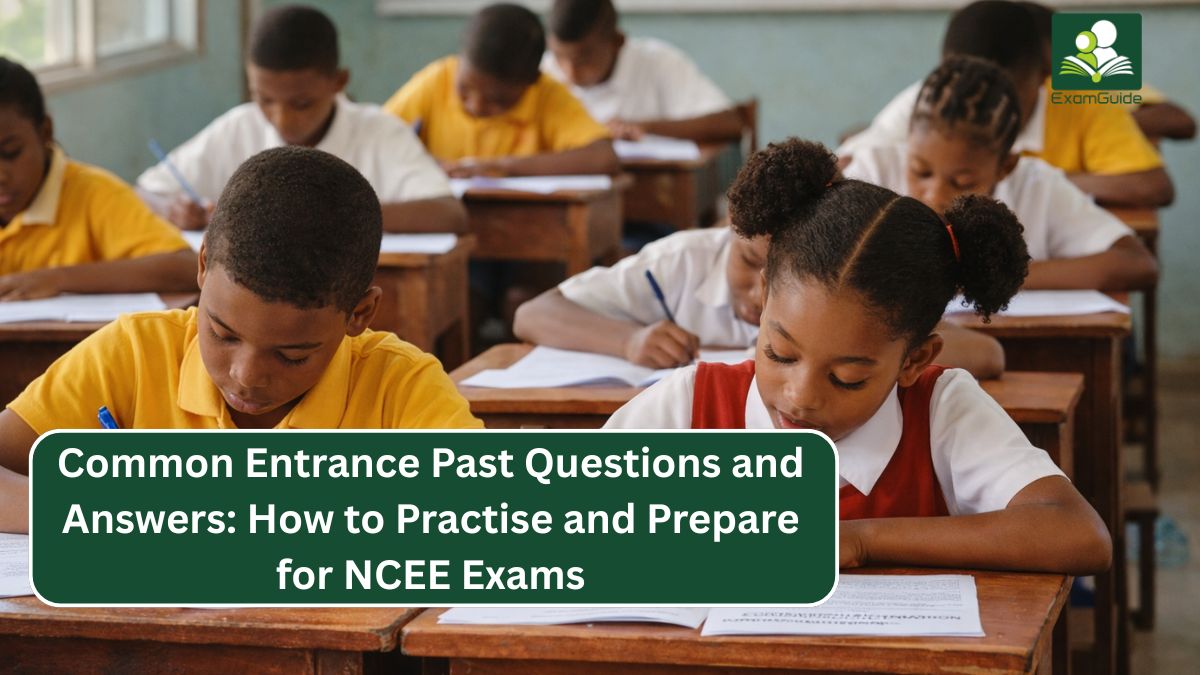
Common Entrance Past Questions and Answers: How to Practise and Prepare for NCEE Exams
Preparing for the National Common Entrance Examination is not just about registering on time or reading textbooks. Many pupils put in effort but still struggle because their preparation lacks structure, especially when it comes to how they use past questions.
For parents, the challenge is not just ensuring that registration is completed correctly, but also guiding their children toward a preparation method that actually produces results. The difference between average and excellent performance in Common Entrance often comes down to how well a pupil practices with past questions.
This article focuses on helping parents and pupils understand how to use Common Entrance past questions effectively, how to build a daily practice system, and how to prepare confidently for Unity School exams.
Table of Content
What Should Parents and Pupils Understand About the Common Entrance Exam Structure?
When Should Preparation with Past Questions Begin?
How to Use Common Entrance Past Questions Effectively for Real Improvement
How Past Questions Help Pupils Understand What the Exam Will Look Like
Why Simply Memorising Past Questions Does Not Work
How to Build a Daily Practice Routine Using Past Questions
How to Break Down Each Subject Using Past Questions
Are Parents Supporting Practice or Just Monitoring It?
How Practicing Past Questions Improves Speed, Accuracy, and Confidence
Common Mistakes Pupils Make When Using Past Questions
How ExamGuide Supports Effective Common Entrance Preparation
What Should Parents and Pupils Understand About the Common Entrance Exam Structure?
Before using past questions effectively, it is important to understand how the exam is structured and what it is testing.
The National Common Entrance Examination is designed to assess both knowledge and reasoning ability. It goes beyond simple recall and tests how well a pupil can think, interpret, and solve problems under time pressure.
The exam typically includes the following areas:
- English Studies, which tests comprehension, grammar, and vocabulary
- Mathematics, which focuses on calculations and problem solving
- Quantitative Aptitude, which tests numerical reasoning
- Verbal Aptitude, which evaluates language reasoning and logic
- General Knowledge, which assesses awareness and basic understanding of everyday concepts
Understanding this structure helps pupils use past questions more effectively because they know what each section requires.
If you want to start structured preparation for common entrance early and avoid random practice, you can begin here → Download ExamGuide NCEE
When Should Preparation with Past Questions Begin?
Many pupils make the mistake of waiting until the exam is close before they start practicing past questions. This reduces the effectiveness of practice.
Preparation should begin months before the exam. The earlier a pupil starts, the more time they have to understand patterns, improve weak areas, and build confidence.
A proper preparation timeline should follow three stages.
1. Foundation Stage
At this stage, pupils focus on understanding subjects and basic concepts. Past questions should be introduced gradually.
2. Practice Stage
This is where past questions become central. Pupils should begin consistent and structured practice across all subjects.
3. Final Stage
Closer to the exam, pupils should practice under timed conditions and focus on accuracy and speed.
You can support this structured common entrance preparation process here → Download ExamGuide NCEE
How to Use Common Entrance Past Questions Effectively for Real Improvement
Using past questions is not just about answering them. It requires a method that ensures learning actually takes place.
1. Practice by Topic Before Attempting Full Papers
Students should begin by focusing on one topic at a time. This helps them understand concepts deeply instead of getting overwhelmed.
2. Attempt Questions Without Assistance
It is important for pupils to try solving questions on their own. This builds independent thinking and reveals true understanding.
3. Study the Explanation Behind Each Answer
The real value of past questions lies in the explanations. Pupils must understand why an answer is correct.
4. Repeat Practice on Difficult Topics
Weak areas should not be avoided. They should be practiced repeatedly until improvement is seen.
5. Gradually Introduce Timed Practice
As the exam approaches, pupils should begin to simulate exam conditions.
A structured system makes this easier and more effective. You can begin organised practice here → Download ExamGuide NCEE
How Past Questions Help Pupils Understand What the Exam Will Look Like
One of the biggest advantages of past questions is that they remove uncertainty.
Pupils who practice consistently begin to notice how questions are framed, how instructions are given, and how answers are expected.
This familiarity reduces confusion during the exam and helps pupils focus on solving questions instead of trying to understand them.
Past questions also reveal which topics appear frequently and which ones require deeper understanding.
Why Simply Memorising Past Questions Does Not Work
Many pupils fall into the trap of memorising answers instead of understanding them.
This approach creates a false sense of confidence. When the question appears in a slightly different form, the pupil becomes confused.
Understanding is what allows flexibility. A pupil who understands a concept can answer different variations of the same question.
Parents should encourage children to focus on learning how answers are derived, not just remembering them.
How to Build a Daily Practice Routine Using Past Questions
Consistency is more important than intensity when it comes to exam preparation.
A daily routine helps pupils stay focused and gradually improve over time.
A good daily practice structure should include:
- Learning a topic
- Practicing questions related to that topic
- Reviewing mistakes and correcting them
Short, focused study sessions are more effective than long, irregular study periods.
You can build a consistent and guided routine here → Download ExamGuide NCEE
How to Break Down Each Subject Using Past Questions
Each subject in the Common Entrance exam requires a slightly different approach.
For English Studies, pupils should focus on comprehension passages and grammar questions. Reading regularly improves performance.
In Mathematics, consistent problem solving is essential. Pupils should practice calculations daily and understand each step.
Quantitative and Verbal Aptitude require reasoning practice. Pupils should focus on patterns, logic, and interpretation.
General Knowledge requires understanding rather than memorisation. Pupils should relate concepts to real life situations.
Using past questions for each subject helps pupils understand how to approach different question types effectively.
Are Parents Supporting Practice or Just Monitoring It?
Parents play an important role in how effective preparation becomes.
Some parents focus only on whether a child is reading, without paying attention to how they are practicing.
Effective support involves:
- Ensuring that practice is consistent
- Encouraging review of mistakes
- Providing a structured environment for study
Parents should focus on guiding the process, not just supervising it.
How Practicing Past Questions Improves Speed, Accuracy, and Confidence
Confidence is built through repeated exposure and improvement.
When pupils practice regularly, they become familiar with exam patterns and improve their ability to answer questions correctly.
As performance improves, confidence increases naturally.
This reduces anxiety and helps pupils remain calm during the exam.
You can build this confidence through structured practice here → Download ExamGuide NCEE
Common Mistakes Pupils Make When Using Past Questions
Many pupils use past questions but still do not improve because of certain mistakes.
Some read through questions without attempting them. Others practice without reviewing their mistakes.
Some start too late, while others focus only on objective questions and ignore other sections.
Avoiding these mistakes ensures that practice leads to real improvement.
How ExamGuide Supports Effective Common Entrance Preparation
ExamGuide provides a structured system that helps pupils practice more effectively.
It organises questions by topic, provides detailed explanations, and allows pupils to track their progress.
This helps pupils identify weak areas and improve consistently.
Instead of random practice, pupils follow a clear system that leads to better understanding and performance.
Start practicing more effectively here → Download ExamGuide NCEE
Conclusion
Success in the Common Entrance examination is not just about effort. It is about using the right methods.
Pupils who practice past questions consistently, understand concepts, and learn from their mistakes are more likely to perform well.
Parents also play an important role in guiding this process and ensuring that preparation is structured.
With the right approach, past questions become a powerful tool that leads to confidence and success in the exam.
Frequently Asked Questions
- When should my child start practicing past questions?
Preparation should begin months before the exam. - How often should pupils practice?
Daily or consistently for best results. - Are past questions enough to pass?
They are essential but should be combined with understanding. - Should pupils memorise answers?
No, understanding is more important. - How can parents support preparation?
By ensuring structure and consistency. - What subjects should pupils focus on?
All subjects should be balanced. - Is timed practice necessary?
Yes, especially closer to the exam. - How do I improve weak areas?
Practice those topics more and review mistakes. - How do I know my child is improving?
When they answer questions more accurately and confidently. - What is the best preparation method?
Structured and consistent practice with past questions.
No comment found
Related Posts

Kwara Governor Approves Free Common Entrance Examination Across the State

Common Entrance Mathematics Guide: Topics Every Primary Six Pupil Should Know

FG Released 2026 National Common Entrance Results Released, as 10 Candidates Score 202 Marks

How to Prepare Your Child for the Common Entrance Examination: A Complete Parent's Guide to NCEE Success

Education Minister Raises Concern Over Absenteeism in 2026 National Common Entrance Exam (NCEE)
