

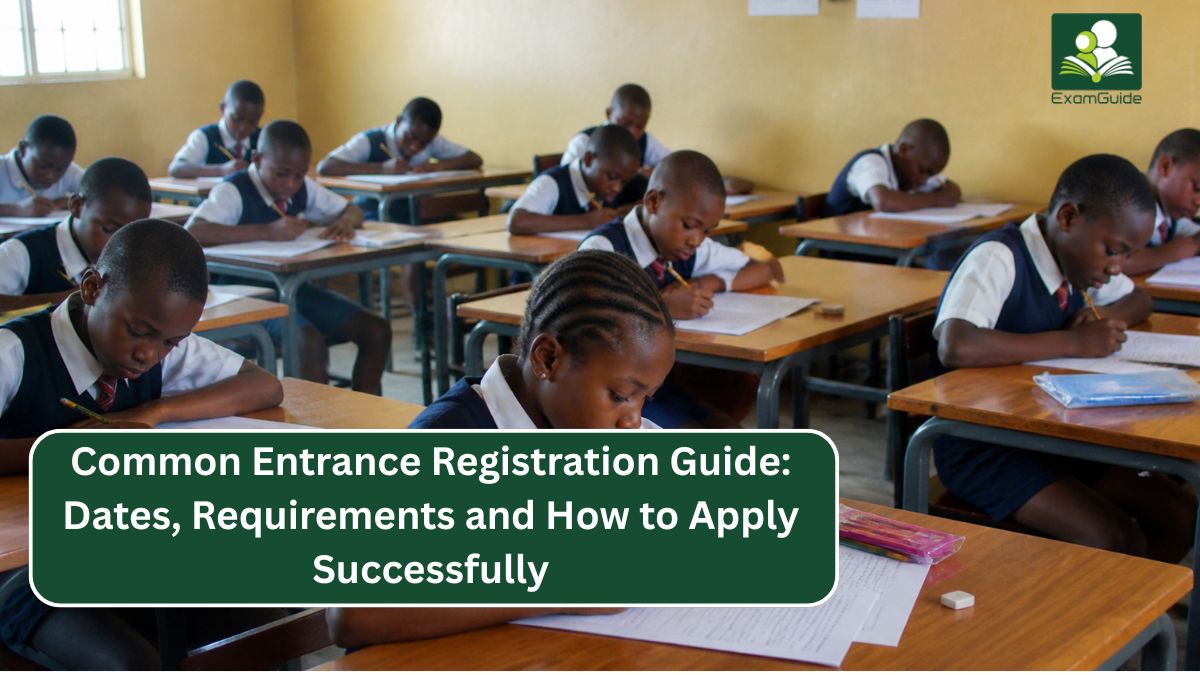
Common Entrance 2026 Registration Guide: Dates, Requirements and How to Apply Successfully
Preparing for the Common Entrance Examination is one of the most important steps in a child’s academic journey. It marks the transition from primary education into secondary school, and for many families, it determines access to quality schools, including Unity Colleges and other competitive institutions across Nigeria.
For parents and pupils, the registration process can sometimes feel confusing. Questions often arise about when the examination will take place, how to register correctly, what requirements are needed, and how to avoid mistakes that could affect participation.
Understanding the process early helps remove uncertainty and allows both parents and pupils to prepare properly. This guide provides a detailed explanation of the Common Entrance 2026 registration process, including key dates, requirements, application steps, and how to prepare effectively.
Table of Content
What Is the Common Entrance Examination and Who Is It For?
When is Common Entrance Starting in 2026?
What Are the Requirements for Common Entrance Registration?
How to Register for Common Entrance 2026 Successfully
What Common Entrance 2026 Timeline Should Parents Expect?
What Common Entrance 2026 Timeline Should Parents Expect?
Are You Making Mistakes During Registration Without Knowing?
How to Prepare Effectively Before the Common Entrance Exam
What Should Pupils Expect on the Exam Day?
How Parents Can Support Their Children During This Process
How ExamGuide Helps You Prepare Effectively
Final Preparation Before the Examination
What Is the Common Entrance Examination and Who Is It For?
The National Common Entrance Examination is conducted for pupils in Primary Six who are seeking admission into Junior Secondary School, particularly into Federal Government Colleges, also known as Unity Schools.
The examination tests pupils in key subjects such as English Studies, Mathematics, Quantitative and Verbal Aptitude, and General Knowledge. It is designed to assess a child’s readiness for secondary education.
Understanding the structure of the exam is the first step toward proper preparation. When pupils know what to expect, they are more confident and better prepared.
To begin practicing common entrance in a structured and guided way, use this platform → Download ExamGuide NCEE
When is Common Entrance Starting in 2026?
The Common Entrance Examination is typically conducted around the middle of the year. The 2026 common entrance exam is expected to take place on Saturday, 6th June 2026 .
Registration usually begins a few months before the examination, often between January and March. Parents are advised to monitor official announcements closely to avoid missing deadlines.
Understanding the timeline is important because it helps parents plan registration, preparation, and revision effectively.
What Are the Requirements for Common Entrance Registration?
Before beginning the registration process, parents must ensure that their child meets the necessary requirements.
1. Age Requirement
Candidates are expected to be at least ten years old and not more than thirteen years old by the time of admission. This ensures that pupils are within the appropriate age range for secondary education.
2. Academic Level
The candidate must be in Primary Six or its equivalent. The examination is specifically designed for pupils at this level.
3. Personal Information
Parents will need to provide accurate details such as the child’s full name, date of birth, and school information.
4. Passport Photograph
A recent passport photograph of the candidate is required for registration and identification purposes.
5. Choice of Schools
Candidates are required to select their preferred schools during registration. This should be done carefully, as it affects placement after the examination.
Ensuring that all requirements are ready before registration begins helps avoid delays and errors.
How to Register for Common Entrance 2026 Successfully
The registration process is straightforward when followed correctly, but mistakes can lead to complications.
1. Obtain Registration Details
Parents should begin by obtaining the official registration details and guidelines once registration opens. This ensures that they are following the correct process.
2. Complete the Online Registration Form
Most registrations are done online. Parents will be required to fill in the candidate’s details carefully. Accuracy is important because incorrect information can affect the exam process.
3. Upload Required Documents
Necessary documents such as passport photographs must be uploaded correctly. Ensure that images meet the required specifications.
4. Select Preferred Schools
Parents should carefully choose schools based on location, competition level, and suitability for the child.
5. Make Payment
Registration fees must be paid through the approved channels. It is important to keep proof of payment.
6. Print Examination Slip
After successful registration, parents should print the examination slip, which contains important details such as the exam centre and date.
Completing each step carefully ensures a smooth registration process.
What Common Entrance 2026 Timeline Should Parents Expect?
Understanding the full timeline helps parents stay organised and avoid last minute pressure.
1. Registration Period
Usually begins early in the year and lasts for a few weeks.
2. Closing Date
Registration deadlines are strict, and late entries are typically not accepted.
3. Examination Date
The exam is usually held between May and June.
4. Result Release
Results are often released a few weeks after the examination.
5. Admission Process
Successful candidates proceed to the admission stage based on their performance and school choices.
Planning around this timeline helps parents and pupils stay prepared at every stage.
Are You Making Mistakes During Registration Without Knowing?
Many parents make simple mistakes during registration that can have serious consequences.
Some of these include entering incorrect personal details, choosing unsuitable schools, or missing registration deadlines.
Others fail to confirm their registration properly or do not keep necessary documents.
Avoiding these mistakes requires careful attention and proper understanding of the process.
Parents should double check all details before submission to ensure accuracy.
How to Prepare Effectively Before the Common Entrance Exam
Registration is only one part of the process. Preparation plays an even more important role in success.
Students should begin preparation early, focusing on understanding key subjects and practicing regularly.
Past questions are one of the most effective preparation tools because they help pupils understand how questions are set and what to expect.
A structured approach to preparation makes learning more effective and reduces exam anxiety.
You can start structured preparation for common entrance here → Download ExamGuide NCEE
What Should Pupils Expect on the Exam Day?
Exam day can be stressful if students are not prepared mentally and practically.
Pupils are expected to arrive early at their designated exam centres with their examination slip and necessary materials.
Instructions will be given before the exam begins, and it is important to listen carefully.
Time management is also important. Pupils should attempt questions calmly and avoid rushing unnecessarily.
Parents should ensure that their children are well rested and properly prepared before the exam.
How Parents Can Support Their Children During This Process
Parents play a crucial role in the success of their children.
They can support by creating a structured study environment, monitoring progress, and providing encouragement.
It is important to balance discipline with support. Excessive pressure can affect a child’s confidence, while proper guidance helps them stay focused.
Parents should also ensure that children practice regularly and review their mistakes.
How ExamGuide Helps You Prepare Effectively
ExamGuide provides a structured system that helps pupils prepare effectively for Common Entrance.
It offers access to past questions, detailed explanations, and performance tracking.
This allows pupils to understand concepts, identify weak areas, and improve consistently.
Instead of preparing randomly, pupils follow a guided approach that builds confidence and improves performance.
You can begin practicing effectively here → Download ExamGuide NCEE
Final Preparation Before the Examination
As the exam approaches, preparation should become more focused.
Pupils should revise key topics, practice important questions, and ensure they are familiar with the exam format.
It is also important to maintain proper rest and avoid last minute panic.
A calm and prepared pupil is more likely to perform well than one who is anxious or rushed.
Conclusion
The Common Entrance 2026 examination is an important step in a pupil’s academic journey. Understanding the registration process, meeting the requirements, and preparing effectively are key to success.
Parents and pupils who plan early, avoid common mistakes, and follow a structured approach are more likely to achieve positive results.
With the right preparation and support, the Common Entrance exam becomes less stressful and more manageable.
Frequently Asked Questions
- When will Common Entrance 2026 take place?
It is expected to take place on Saturday, 6th June 2026. - When does registration start?
Registration usually begins early in the year. - What is the age requirement?
Candidates should be between ten and thirteen years old. - Is registration done online?
Yes, most registrations are completed online. - What documents are required?
Personal details, passport photograph, and school information. - Can I change my school after registration?
This may not be possible after submission. - How can pupils prepare effectively?
Through consistent study and practice with past questions. - Are past questions important?
Yes, they help pupils understand exam patterns. - How can parents support their children?
By providing structure, guidance, and encouragement. - When are results released?
Usually a few weeks after the examination.
No comment found
Related Posts

Kwara Governor Approves Free Common Entrance Examination Across the State

Common Entrance Mathematics Guide: Topics Every Primary Six Pupil Should Know

FG Released 2026 National Common Entrance Results Released, as 10 Candidates Score 202 Marks

How to Prepare Your Child for the Common Entrance Examination: A Complete Parent's Guide to NCEE Success

Education Minister Raises Concern Over Absenteeism in 2026 National Common Entrance Exam (NCEE)
