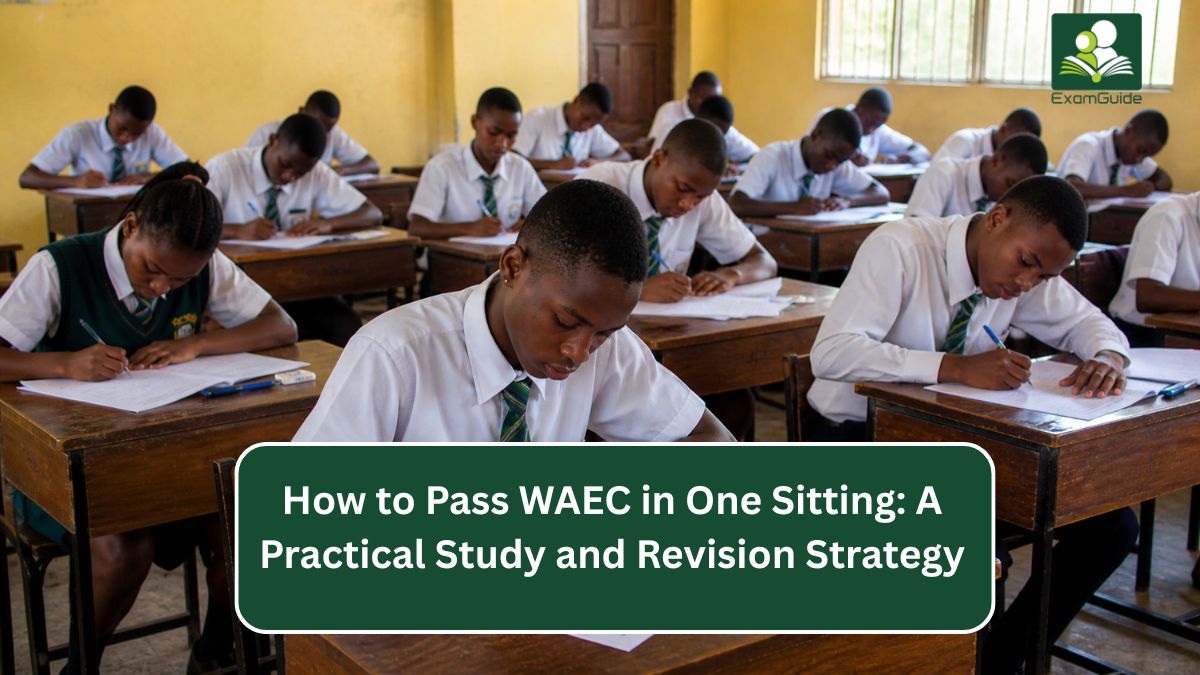
How to Pass WAEC in One Sitting: A Practical Study and Revision Strategy
Passing WAEC in one sitting is not luck. It is not reserved for only the “brilliant” students. It is a result of the right preparation, the right system, and consistent execution.
Every year, thousands of candidates sit for the West African Senior School Certificate Examination and a significant number fall short of their expectations. Some have to repeat, some struggle to meet admission requirements, while some lose confidence in themselves.
Most students are not failing because they cannot pass, they are failing because they are not preparing the right way.
This guide is designed for three people. The student preparing for WAEC, the repeat candidate who wants a different outcome this time, and the parent who wants to guide their child effectively.
By the time you finish reading this, you will understand exactly how to prepare, revise, practice, and sit for WAEC WASSCE with confidence.
Table of Content
Why Do Students Fail WAEC WASSCE?
What Does It Take to Pass WAEC in One Sitting?
How to Create a Study Timetable That Guarantees Full Syllabus Coverage
What Effective Studying Means for WAEC Candidates
How to Use Past Questions to Score Higher in WAEC WASSCE
A Practical Revision Strategy That Works
Subject Focus: How to Balance All Your Subjects
Exam Technique: How to Maximize Your Score
Mindset Preparation: Building Confidence Before the Exam
How ExamGuide Helps You Pass WAEC in One Sitting
Why Do Students Fail WAEC WASSCE?
Understanding why students fail WAEC is not just theory. It is a practical step that helps you avoid repeating the same mistakes that affect thousands of candidates every year. Both first time candidates and repeat candidates can benefit from identifying these issues early and correcting them before the exam.
Below are the most common reasons students fail WAEC, along with clear explanations and what to do differently.
1. Studying Without a Plan
Many students prepare for WAEC without a structured timetable, reading based on mood or urgency. This leads to uneven preparation where some subjects are overstudied while others are ignored. Because the WAEC syllabus is broad, this approach often results in incomplete coverage and last minute panic.
A clear and realistic timetable helps break subjects into topics, allocate time properly, and ensure full syllabus coverage.
2. Passive Reading Instead of Active Learning
A common mistake is assuming that reading automatically leads to understanding. Students often go through notes repeatedly but struggle to answer questions. This is because passive reading does not build retention or application skills.
WAEC requires understanding and application. Active learning involves explaining concepts, solving questions, and testing yourself. Instead of asking if you have read a topic, focus on whether you can answer questions without help.
3. Ignoring Past Questions
Past questions are one of the most effective tools for WAEC preparation, yet many students either ignore them or use them incorrectly. WAEC follows patterns, and practising past questions helps you understand these patterns and what to expect.
To benefit fully, students should attempt questions, review answers, and study explanations. This improves both understanding and exam confidence.
4. Poor Time Management
Time management is a major challenge for many students. Some spend too much time on one question, while others rush through the paper. This often happens because they have not practised under timed conditions. Regularly simulating exam conditions helps improve speed, accuracy, and confidence. Time management is a skill that must be developed before the exam.
5. Weak Revision Strategy
Many students revise by simply re reading their notes, which is not very effective. Proper revision should focus on weak areas and involve active methods such as testing yourself and solving questions.
Revision should also be spread over time rather than done in a rush close to the exam. When done correctly, it improves retention and prepares you for different types of questions.
6. Lack of Consistency
Inconsistent study habits affect performance significantly. Some students study intensely for a short period and then stop, while others delay preparation until the exam is near. Learning requires regular practice and repetition. Studying consistently, even for a few hours daily, helps reinforce knowledge and build confidence over time.
7. Overdependence on Shortcuts and Malpractice
Relying on shortcuts or malpractice often leads to failure. Students who depend on these methods do not build the understanding needed to answer questions independently. WAEC tests knowledge and application, and without proper preparation, performance will suffer. The most reliable approach remains consistent study and practice.
Avoiding these mistakes already puts you ahead of many candidates. When combined with a structured study plan, consistent practice, and the right tools, passing WAEC in one sitting becomes a realistic goal.
Prepare for WAEC the smart way and pass in one sitting → Download ExamGuide SSCE
What Does It Take to Pass WAEC in One Sitting?
To pass WAEC in one sitting, a student must obtain at least five credits including English Language and Mathematics in a single attempt.
This requires:
- Full coverage of the WAEC syllabus
- Strong understanding of key topics
- Consistent practice with past questions
- Effective time management during exams
Students who succeed do not rely on luck. They rely on preparation.
How to Create a Study Timetable That Guarantees Full Syllabus Coverage
A study timetable is more than a schedule. It is what ensures you cover the WAEC syllabus completely without leaving gaps. Many students fail not because they did not read, but because they did not study the right topics at the right time.
A well structured timetable gives direction, ensures balance across subjects, and helps you track progress.
Step 1: List All Subjects and Break Them Into Topics
Instead of studying subjects broadly, break them into specific topics based on the WAEC syllabus. This helps you cover the required content in detail and track what you have completed. Students who skip this step often assume they have studied a subject when they have only covered a small part of it.
Step 2: Identify Your Weak and Strong Areas
Your timetable should reflect your strengths and weaknesses. Subjects you find difficult should appear more frequently and be studied during your most productive hours. At the same time, maintain your stronger subjects so your performance remains balanced.
Step 3: Allocate Realistic Study Time
Avoid creating a timetable you cannot follow. Studying for three to five focused hours daily is more effective than planning long hours you cannot sustain. Include short breaks to maintain concentration and ensure consistency over time.
Step 4: Combine Learning, Practice, and Revision
Each study session should include three parts. First, understand the topic. Second, practise questions related to it. Third, review your answers and correct mistakes. This approach helps you move from reading to actual understanding and application.
Step 5: Review and Adjust Weekly
Your timetable should evolve as you progress. At the end of each week, assess what you have covered, identify weak areas, and adjust your plan. This keeps your preparation on track and ensures steady improvement.
What Effective Studying Means for WAEC Candidates
Effective studying is not about how long you read, but how well you understand and apply what you have learned. Many students study for hours but struggle in exams because they focus on reading instead of learning.
1. Understand the Concept Clearly
Focus on understanding topics deeply rather than memorising. If you cannot explain a concept in simple terms, then you do not fully understand it.
2. Apply What You Learn Through Practice
After studying, attempt questions immediately. This helps you identify gaps in your understanding and prepares you for how WAEC questions are structured.
You can begin structured practice here → Download ExamGuide SSCE
3. Learn From Mistakes
Review your answers carefully and understand where you went wrong. Avoid skipping mistakes. Each correction improves your understanding and reduces the chances of repeating errors in the exam.
How to Use Past Questions to Score Higher in WAEC WASSCE
Past questions are one of the most effective tools for WAEC preparation because they reveal patterns in how questions are set. Students who practise them properly become more familiar with the exam structure and expectations.
They also help you identify weak areas, improve speed, and build confidence through repeated practice.
To use past questions effectively:
- Start with topic based practice to build strong understanding
- Attempt questions before checking answers
- Study explanations to understand why answers are correct
- Practise under timed conditions as the exam approaches
- Track weak areas and revisit them during revision
Avoid common mistakes such as reading answers without attempting questions, delaying practice until the exam is close, or ignoring theory questions.
A structured approach makes practice more effective. ExamGuide helps organise past questions by topic, provides clear explanations, and allows you to track your progress consistently.
Start solving WAEC past questions in a structured and effective way here → Download ExamGuide SSCE
A Practical Revision Strategy That Works
Revision is not about going over everything again. It is about strengthening your understanding and fixing weak areas before the exam.
1. Focus on Weak Topics First
Your revision should begin with topics you find difficult. Spending more time on weak areas improves your overall performance more than repeating what you already know.
2. Use Active Recall
Instead of reading your notes repeatedly, try to recall key points without looking at your book. This improves memory and helps you retain information for longer periods.
3. Apply Spaced Repetition
Avoid cramming everything at once. Spread your revision over time and revisit topics at intervals. This method improves long term retention.
4. Practice During Revision
Revision should always include solving questions. This reinforces your understanding and helps you identify gaps in your knowledge.
5. Use Structured Tools
Platforms that provide organized questions, explanations, and progress tracking make revision more effective and less stressful.
You can improve your revision process using this platform →Download ExamGuide SSCE
Subject Focus: How to Balance All Your Subjects
One common mistake students make is focusing too much on certain subjects while neglecting others. WAEC requires you to perform well across multiple subjects, so balance is essential.
Give more time to subjects you find difficult, especially those that are core requirements like English and Mathematics. At the same time, continue to revise subjects you are already good at so that your performance does not drop.
Break each subject into smaller topics and study them systematically. This makes learning more manageable and ensures that you cover the entire syllabus.
Consistent practice across all subjects helps you maintain balance and increases your chances of getting the required credits.
Exam Technique: How to Maximize Your Score
Good preparation must be combined with proper exam technique. Many students lose marks not because they do not know the answers, but because they do not apply the right approach in the exam hall.
1. Read Questions Carefully
Take time to understand what each question is asking before you start writing. Misinterpreting a question can lead to unnecessary mistakes.
2. Start With Questions You Know
Answering easier questions first helps you secure marks quickly and builds confidence as you progress through the paper.
3. Manage Your Time Properly
Allocate time to each section and avoid spending too long on a single question. This ensures that you attempt all required questions.
4. Present Your Answers Clearly
Write neatly and organise your answers properly. In subjects that require calculations, show your steps clearly so you can earn marks even if your final answer is not perfect.
5. Review Before Submission
If time allows, go through your answers to check for errors, omissions, or incomplete responses.
Practicing under exam conditions helps you develop and refine these techniques.
Simulate real WAEC exam conditions here → Download ExamGuide SSCE
Mindset Preparation: Building Confidence Before the Exam
Preparation is not only about what you study. Your mindset plays a major role in how you perform.
Students who approach exams with fear and doubt often struggle to perform at their best, even when they are prepared. Confidence comes from consistent preparation and familiarity with the exam format.
To build the right mindset, focus on your preparation rather than worrying about the outcome. Avoid comparing yourself with other students, as this can create unnecessary pressure.
Develop a routine that includes proper rest, healthy habits, and regular study. This helps you stay mentally alert and focused.
Parents also play an important role here. Encouragement and support create a positive environment that helps students perform better, while excessive pressure can lead to anxiety and reduced confidence.
How ExamGuide Helps You Pass WAEC in One Sitting
ExamGuide gives students a structured and practical way to prepare for WAEC, removing confusion and helping them study with direction.
With ExamGuide, students can:
- Practice past questions by topic to build strong understanding step by step
- Access detailed explanations that show why answers are correct
- Track performance and easily identify weak areas
- Study in a structured and consistent way without guesswork
Instead of reading randomly, students follow a clear system that improves confidence, accuracy, and overall performance.
Conclusion
Passing WAEC in one sitting is achievable when preparation is structured, consistent, and focused on understanding rather than memorisation. Students who follow a clear study plan, practise regularly, and revise effectively are more likely to perform with confidence.
Parents also play an important role by providing support, discipline, and the right learning environment. With proper guidance and the right tools, students can stay on track and avoid the common mistakes that lead to failure.
Ultimately, success in WAEC is not by chance but by preparation. When students combine the right strategy with consistent effort, they position themselves to walk into the exam hall ready and succeed.
Frequently Asked Questions
- Can I pass WAEC in one sitting without studying every day?
No. Daily study is necessary for proper coverage and retention. - How many hours should I study daily?
Three to five focused hours daily is effective. - Are past questions enough to pass WAEC?
They are essential but should be combined with proper understanding. - When should I start preparing for WAEC?
Preparation should start months before the exam. - How can parents help their children succeed?
Provide structure, encouragement, and access to effective resources. - What is the best revision method?
Active recall and practice based revision. - How do I improve in weak subjects?
Break topics down and practice consistently. - Is extra lesson necessary?
Not always, if you have the right materials. - How do I manage time in the exam hall?
Practice under timed conditions regularly. - What should repeat candidates do differently?
Adopt a structured and practical study strategy.
No comment found
Related Posts

WAEC WASSCE Theory Questions: How to Write Answers That Earn Full Marks
How to Prepare for WAEC WASSCE English: Essential Tips for Comprehension and Essays

What is the Difference Between NABTEB and WAEC WASSCE? Which Exam Is Right for You?

WAEC Announced WASSCE for Private Candidates 2026 Second Series Final Timetable
WAEC Issues Urgent Advisory to Students Over Remita Payment Problems