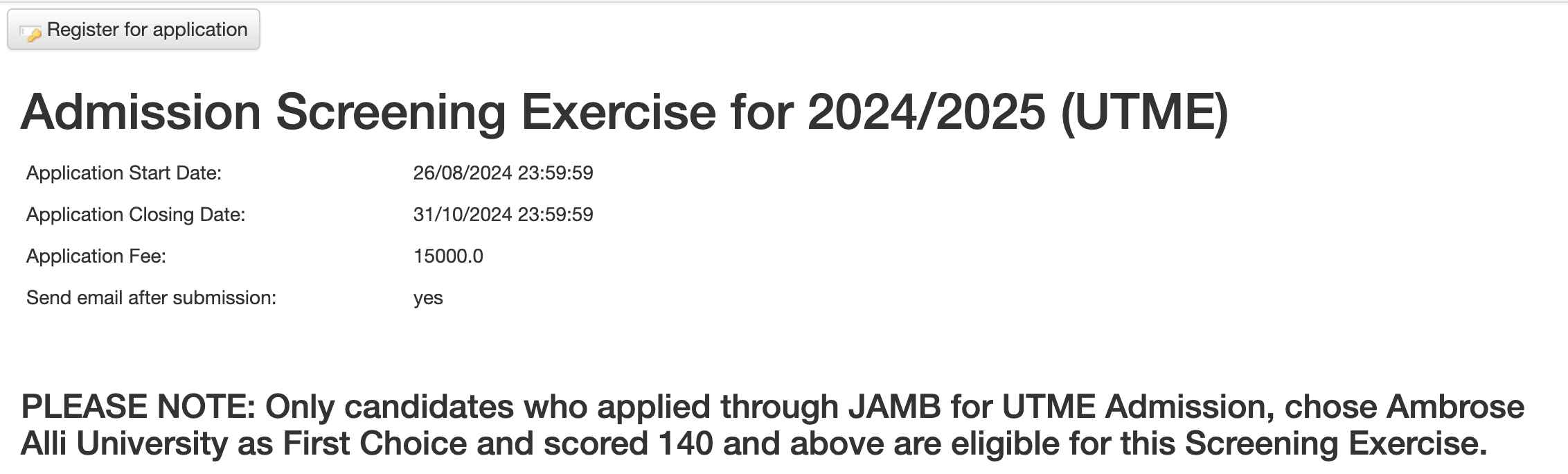
Post-UTME Season Is Coming. How to Start Preparing Before Your School Announces Dates.
For most candidates, Post-UTME preparation only begins once a university announces its screening date, which usually leaves just a few weeks of frantic, last-minute revision. But the students who consistently perform best in the Post-UTME screening are the ones who started preparing before the announcement was even made. Here is how to use this waiting period to your advantage.
Why waiting for the announcement is a costly habit.
Universities typically announce Post-UTME dates with only a few weeks' notice, and by the time registration opens, thousands of candidates are competing for the same limited preparation window. If you wait until then to start, you are preparing under the same time pressure as everyone else. Starting now means you walk into the screening with weeks of preparation that most other candidates lack.
Focus on your JAMB UTME subjects first.
Most Post-UTME screening exams draw heavily from your JAMB UTME subject combination, often with a similar structure and difficulty level. This means the preparation you are doing right now does not need to wait for a specific school's syllabus. Strengthening the grasp of your UTME subjects is preparation that carries directly into Post-UTME, regardless of which university eventually announces its date first.
Identify your target institutions early.
While you wait, take time to shortlist two or three universities you are seriously considering. Each institution tends to have a slightly different Post-UTME format; some rely purely on CBT screening, others factor in O-level results or WAEC aggregate scores. Knowing this in advance means you are not scrambling to understand the format the moment the announcement drops.
Build consistency through structured practice.
Rather than studying in bursts once dates are announced, use this quieter period to build a steady, low-pressure practice routine. The ExamGuide Post - UTME practice App is particularly useful here, since it allows you to work through Post-UTME-style questions at your own pace, well before the pressure of a countdown sets in. Consistent, unhurried practice now builds a stronger foundation than intense cramming later.
Track your progress over time.
One advantage of starting early is the ability actually to measure improvement. Take a diagnostic practice test now, note your score and weak areas, then revisit the same subjects every couple of weeks. Watching your accuracy improve over time is not just encouraging; it also tells you exactly where to keep pushing before the real screening date arrives.
Do not neglect speed and accuracy under time pressure
Post-UTME exams are typically timed tightly, and many candidates who know the content still lose marks simply because they run out of time. Practising under timed conditions now, rather than only once dates are confirmed, trains you to work at the pace the actual exam demands.
The gap before Post-UTME dates are announced is not dead time; it is your biggest advantage if you use it well. Start now, and let the announcement find you already prepared rather than starting from zero.
To download ExamGuide Post - UTME Practice App, visit www.examguide.com/offline/products/post-utme
No comment found
Related Posts
Post UTME Preparation Guide: Best Tips to Score High in Screening Exams

Post-UTME Screening: What It Is, How It Works, and How to Prepare Before Your University Date

UNIOSUN Post UTME Result for 2024/2025 is Out - CHECK NOW

UNIMED Supplementary Post UTME Form 2025/2026 Application Update

YABATECH Post UTME Form 2025-26: How to Apply and Important Updates