

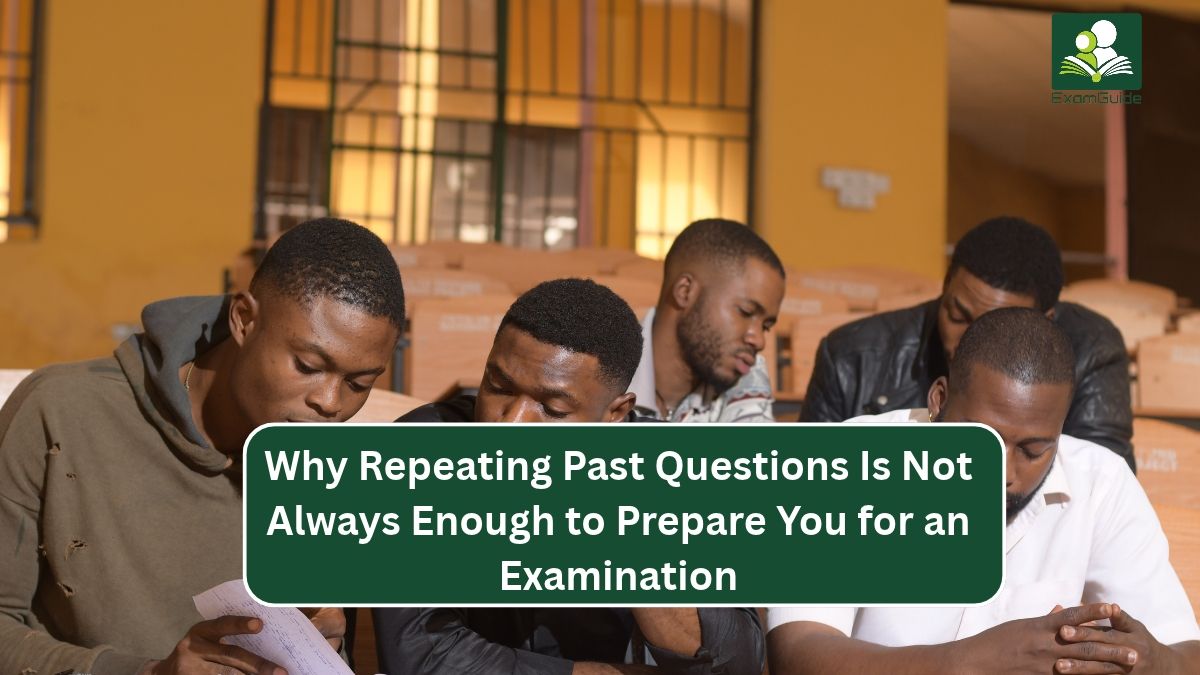
Why Repeating Past Questions Is Not Always Enough to Prepare You for an Examination
For many students preparing for examinations such as JAMB UTME, WAEC WASSCE, NECO, BECE and Common Entrance, practising past questions is one of the most familiar parts of studying. Students collect past question booklets, download practice applications and attempt questions from previous examination years. Some even repeat the same questions several times because they believe that becoming familiar with them will improve their chances of answering correctly in the actual examination.
Past questions are genuinely useful. They help students understand examination formats, recognise common question patterns, practise applying what they have learnt and identify topics they find difficult. However, there is an important difference between understanding a question and remembering its answer.
A student may answer a question correctly after seeing it several times without fully understanding the concept behind it. When the same concept appears in a different format, uses different figures or requires another method of reasoning, that student may struggle to answer correctly.
This is why repeating past questions alone is not always enough to prepare for an examination. Effective preparation requires students to understand their subjects, cover the relevant syllabus, practise different types of questions and learn from their mistakes. Past questions should support learning, not replace it.
Table of Content
Why Are Past Questions Important in Examination Preparation?
What Happens When Students Memorise Past Question Answers?
Why Can Familiar Questions Become Different in the Actual Examination?
Does Repeating Past Questions Improve Examination Performance?
How Should Students Combine Past Questions With Syllabus Study?
How Can Students Learn From Their Past Question Mistakes?
Are Timed Mock Examinations Necessary?
How Can Parents and Tutors Help Students Avoid Depending Only on Past Questions?
How Can ExamGuide Help Students Practise More Effectively?
Why Are Past Questions Important in Examination Preparation?
Past questions are useful because they give students an opportunity to practise what they have learnt in a format that resembles the examination they are preparing for. Rather than studying topics without knowing how they may be assessed, students can use previous questions to understand how examiners test different areas of a subject.
For example, a student preparing for WAEC Biology may discover that questions frequently require an understanding of nutrition, reproduction, ecology and other topics. A JAMB candidate may use previous UTME questions to become familiar with multiple-choice questions, subject-specific demands and the need to manage time.
Past questions also help students identify areas where they need more attention. If a student repeatedly struggles with questions on quadratic equations, comprehension or chemical reactions, this can indicate that the relevant topics require further study.
Another benefit is that regular practice helps students become more comfortable with examination conditions. They gradually learn to read questions carefully, eliminate incorrect options, manage their time and make decisions without relying entirely on assistance.
Students preparing for different examinations can explore the relevant practice resources on the ExamGuide learning platform. Using examination-specific practice materials can help students become familiar with the type of questions they are likely to encounter.
However, the usefulness of past questions depends on how students approach them. Simply attempting the same questions repeatedly does not automatically mean that learning is taking place.
What Happens When Students Memorise Past Question Answers?
One of the biggest problems with relying only on repeated past questions is that students can begin to memorise answers instead of understanding the concepts behind them.
Consider a student who repeatedly practises a Mathematics question involving the calculation of simple interest. After seeing the question several times, the student remembers the formula and the steps required to arrive at the answer.
If the same question appears in the examination with the same figures and wording, the student may answer it correctly. However, what happens when the examiner changes the figures, presents the information differently or asks the student to calculate the principal instead of the interest?
A student who understands the relationship between principal, rate, time and interest can work through the new question. A student who only memorised the previous answer may not know where to begin.
The same problem occurs in subjects such as Biology, Chemistry, Economics and English Language. Students may remember the correct options to familiar questions without understanding why those options are correct.
Memorisation is not always wrong. Students need to remember formulas, definitions, facts, vocabulary and important information. The problem arises when memorisation becomes the only method of preparation and students cannot apply what they remember to a new situation.
Why Can Familiar Questions Become Different in the Actual Examination?
Examiners do not have to repeat a previous question word for word to test the same knowledge. They can assess one concept in several ways, which means students need to understand the underlying topic rather than depend on recognising a familiar question.
There are several ways this can happen.
1. The question may be reworded
A familiar question can be presented using different words while testing exactly the same concept. A student who understands the topic should still be able to identify what the question requires.
For example, a Biology question may ask students to identify the function of the red blood cells. Another question may describe how oxygen is transported around the body and ask students to identify the blood component responsible.
Although the wording is different, both questions test knowledge of the function of red blood cells.
Students who understand the concept can recognise the connection between the questions. Those who rely on memorising the original wording may find the second question unfamiliar.
2. The figures or examples may change
In Mathematics, Physics, Chemistry and Economics, examiners can change the figures used in a question while testing the same principle.
A student who has memorised how to solve a particular calculation may struggle when the figures change because the student has not developed a proper understanding of the method.
This is why students should practise different examples of the same topic. They should understand the formula, know when to apply it and be able to work through calculations independently.
3. The same concept may be tested in a different way
Sometimes, an examination question requires students to apply knowledge rather than simply recall information.
For example, a student may understand the definition of demand in Economics but struggle when asked to explain what happens to demand when consumer income increases.
Knowing a definition is important, but the student must also understand how the concept works and how it relates to other economic principles.
The ability to apply knowledge is particularly important in subjects where questions require calculations, interpretation, explanation and problem-solving.
Does Repeating Past Questions Improve Examination Performance?
Yes. Repeating past questions can improve examination preparation when students use the exercise to retrieve information, test their understanding and correct their mistakes.
Educational research refers to this approach as retrieval practice. It involves making an effort to recall information from memory rather than simply reading or looking at the correct answer.
A major meta-analysis published in Psychological Bulletin examined research on test-enhanced learning and found that practice testing can support both retention and the transfer of knowledge to other questions and situations. However, the benefits are influenced by factors such as the type of practice, feedback and how closely the practice task relates to the later assessment.
This means students should not stop practising past questions. Instead, they should improve the way they practise.
For example, attempting a question without looking at the answer, explaining why an option is correct and revisiting the topic when a mistake occurs are more meaningful learning activities than simply reading a question and memorising its answer.
Students should also practise questions that test the same concept in different ways. This helps them develop the ability to recognise what a question is testing, even when the wording or presentation changes.
How Should Students Combine Past Questions With Syllabus Study?
The examination syllabus provides a guide to the topics students are expected to study. Past questions provide opportunities to practise how knowledge from those topics may be assessed.
These two resources serve different purposes, and students need both.
A student who relies only on past questions may concentrate on topics that appeared frequently in previous examinations while neglecting other areas of the syllabus. This can create gaps in knowledge, especially when an examination includes questions from topics the student has not practised sufficiently.
A better approach is to use the syllabus as a study guide and past questions as a way to test understanding.
For example, a student preparing for JAMB UTME Chemistry should identify the topics in the relevant syllabus, study each topic using appropriate textbooks or notes, and then attempt questions related to that topic.
If the topic is chemical bonding, the student should first understand the different types of chemical bonds, how they form and the properties associated with them. After studying the topic, the student can attempt past questions to assess their understanding.
This approach is more effective than immediately attempting questions and memorising the correct options without first understanding the subject matter.
Students preparing for WAEC WASSCE can also consult the ExamGuide SSCE practice resources to support their revision with examination-related questions and explanations.
How Can Students Learn From Their Past Question Mistakes?
Attempting questions is only one part of effective practice. What students do after answering those questions is equally important.
Some students check their scores, look at the correct answers and immediately move to another set of questions. Although this may increase the number of questions they have attempted, it does not necessarily address the reasons they answered incorrectly.
Mistakes should be treated as information about what a student needs to improve.
A useful approach involves the following steps:
- Attempt the question independently. Read each question carefully and try to answer it without immediately checking the solution. This helps you identify what you can recall and apply without assistance.
- Check the correct answer and explanation. Do not stop at knowing which option is correct. Read the explanation and understand the reasoning behind the answer. If your answer was wrong, identify where your thinking went off track.
- Identify the topic being tested. Determine the subject area and specific concept connected to the question. A mistake in a question about percentages, for example, may indicate that you need to revisit the relevant Mathematics topic.
- Return to your learning materials. Read the relevant textbook section, study note or lesson again. Work through examples that explain the concept before attempting more questions.
- Practise a different version of the question. Find another question that tests the same concept but uses different wording, figures or examples. This helps you determine whether you understand the topic or have only memorised the original answer.
- Review the question later. Return to difficult questions after some time to check whether you can still solve them independently. This helps reinforce learning and makes it easier to identify concepts that require further revision.
For students, this process may take more time than simply attempting hundreds of questions. However, it makes each practice session more useful because the aim is not just to complete questions but to improve understanding.
Are Timed Mock Examinations Necessary?
Timed mock examinations are important because knowing a subject and performing well under examination conditions are not exactly the same thing.
A student may understand several topics but struggle to complete an examination because they spend too much time on difficult questions, mismanage their time or become anxious.
Mock examinations help students practise working within the time available. They also provide an opportunity to assess their performance across different topics and identify areas that need further attention.
For students preparing for JAMB UTME, timed CBT practice is particularly useful because it helps them become familiar with answering questions on a computer within a limited period.
Students preparing for WAEC, NECO and other written examinations should also practise answering questions within the time allowed. They need to develop the ability to organise their answers, allocate time appropriately and complete the required sections.
After each mock examination, students should review their performance rather than focus only on the final score. They should identify the questions they missed, the topics that caused difficulty and the reasons they could not complete the examination on time.
Students preparing for UTME can explore ExamGuide's UTME practice platform to access examination-style practice and improve their familiarity with CBT questions.
How Can Parents and Tutors Help Students Avoid Depending Only on Past Questions?
Parents and tutors play an important role in helping students develop better examination preparation habits.
When parents assess preparation only by the number of questions a child has attempted or the scores recorded during practice, students may begin to prioritise quantity over understanding.
A student who answers 100 familiar questions correctly may appear well prepared, but that result does not necessarily show whether the student can handle unfamiliar questions.
Parents should therefore encourage children to explain what they have learnt, discuss difficult topics and show how they arrived at their answers. Asking a child to explain why an answer is correct can reveal whether the child understands the concept or is simply recalling a familiar response.
Tutors can support this process by combining topic explanations with practice questions. Rather than moving from one question to another without reviewing mistakes, they should identify recurring weaknesses and provide additional examples that help students understand the underlying concepts.
How Can ExamGuide Help Students Practise More Effectively?
Past questions remain an important part of examination preparation, but students need more than a collection of questions and answers. They also need access to learning materials that help them understand difficult topics, review their mistakes and improve their performance.
ExamGuide brings together past examination questions, syllabus-based model questions and detailed explanations to support students preparing for examinations such as JAMB UTME, WAEC, NECO, BECE and Common Entrance. Rather than focusing only on selecting the correct option, students can use the explanations to understand why an answer is correct and learn from questions they answered incorrectly.
The platform also provides a Classroom section with syllabus-based study notes, video lessons and topic exercises. These resources can help students study a topic before attempting related questions. Its AI Tutor, provides additional learning support by helping students ask questions and understand difficult concepts.
Students can also use study planning and performance analysis features to organise their preparation and review their progress. The offline application includes a Guardian Portal that allows parents to monitor their children's learning activities and performance.
With online and offline learning options, students can access supported learning and practice resources in a way that suits their devices and study arrangements. Parents and students can explore the ExamGuide learning platform to find the appropriate examination preparation resources.
Conclusion
Repeating past questions can improve examination preparation, but it should never become the only method students rely on. Knowing the answer to a familiar question does not always mean understanding the topic, and recognising a question from a previous examination does not guarantee the ability to answer a differently worded version.
Students preparing for JAMB UTME, WAEC WASSCE, NECO, BECE, Common Entrance and other examinations should combine syllabus study, concept learning, past question practice, mistake review and timed mock examinations.
Parents and tutors should also encourage students to focus on understanding rather than simply completing large numbers of questions. When students can explain their answers, apply what they have learnt to unfamiliar questions and recognise where they need improvement, they are developing the skills required for effective examination preparation.
Frequently Asked Questions
1. Is practising past questions enough to pass JAMB?
No. Past questions are useful for understanding the UTME format, practising subject-related questions and identifying areas of difficulty. However, students must also study the JAMB syllabus, understand their subjects and practise unfamiliar questions. Depending entirely on repeated questions can leave important gaps in their preparation.
2. How many years of past questions should a student practise?
There is no fixed number of years that guarantees adequate preparation. Students should use available past questions to understand examination patterns and practise relevant topics. However, they should prioritise syllabus coverage, understanding and the quality of their practice rather than attempting to complete a particular number of years.
3. Should students memorise past question answers?
Students should remember important facts, definitions, formulas and concepts, but they should not depend on memorising the answers to individual questions. Understanding why an answer is correct makes it easier to apply the same knowledge when an examiner changes the wording, figures or examples.
4. Why do I get past questions correct during practice but struggle with new questions?
This may happen when you have become familiar with the answers without fully understanding the concepts being tested. You may recognise the original question but struggle when the examiner presents the same idea differently. Revisit the topic, study the underlying principles and practise other versions of the question.
5. Should I study the syllabus before attempting past questions?
It is helpful to study the relevant topic before attempting questions on it, especially when you are learning the subject for the first time. However, you do not have to wait until you have completed the entire syllabus before practising. You can study a topic, attempt related questions and use your mistakes to guide further learning.
6. How can I know whether I understand a topic or have only memorised its answers?
Try explaining the concept without looking at your notes. Then attempt a question that tests the same topic using different wording or figures. If you can explain the idea and solve the unfamiliar question independently, you are more likely to understand the topic.
7. How many past questions should I practise every day?
The number depends on your examination, available study time, subject difficulty and level of understanding. It is better to attempt a manageable number of questions and review them properly than to rush through hundreds without understanding your mistakes. Consistent, focused practice is more useful than quantity alone.
8. Are mock examinations more useful than past questions?
They serve different purposes, so students should use both. Past questions help students practise specific topics and understand examination patterns, while mock examinations help them assess their overall preparation under timed conditions. Reviewing mistakes after both exercises is important.
9. What should I do when I repeatedly get questions from one topic wrong?
Return to the topic and study it again using your textbook, class notes or other reliable learning materials. Identify the specific concept you do not understand, work through examples and attempt simpler questions before progressing to more difficult ones. Continue practising until you can answer different versions independently.
10. Can ExamGuide help students who struggle with certain examination topics?
Yes. ExamGuide provides syllabus-based study notes, video lessons, topic exercises, past questions and detailed explanations. Its AI Tutor also provides additional learning support when students encounter difficult concepts. These resources can help students study topics, practise questions and review areas where they need improvement.
No comment found
Related Posts

Choosing an Exam Preparation App for Your Child: Features Parents Should Look Out For

Zigmatech Awards 5 top scoring ExamGuide users in 2026 UTME N100, 000 each – Promises higher rewards for 2027
Nursing Admission: Failed WAEC Subjects, Pending NECO Results Leave Candidates Uncertain of Getting Admitted

2026 WAEC Results Crisis Deepen as Senior Official Allegedly Confirms Irregularities, Glitches

NYSC, JAMB Move to Introduce New Framework to Make Candidates Data Changes Seamless