
Striking Reforms of Professor Is-haq Oloyede 10 Years in Office as JAMB's Registrar
As Professor Is-haq Oloyede prepares to bow out as Registrar of the Joint Admissions and Matriculation Board (JAMB) on 31 July 2026, his nearly decade-long leadership offers a rare opportunity to reflect on what institutional reform looks like in practice within Nigeria’s public sector.
Appointed in August 2016 by former President Muhammadu Buhari, Is-haq Oloyede inherited a system that, while already undergoing a gradual digital transition, was still burdened by public distrust, examination malpractice concerns, admission irregularities, and operational inefficiencies. He succeeded Professor Dibu Ojerinde, who had led the Board from 2007 to 2016, and stepped into office at a time when expectations for credibility and transparency in Nigeria’s tertiary admission system were at an all-time high.
What followed was not a sudden revolution, but a steady, deliberate tightening of systems, processes, and accountability structures that gradually reshaped JAMB’s public identity.
Below Striking Reforms of Professor Is-haq Oloyede 10 Years in Office as JAMB's Registrar
DEAR JAMBITE: You can also step up your JAMB preparation with ExamGuide UTME app, a trusted tool for UTME exam success. Join thousands of successful students and turn your UTME dream score into reality – download ExamGuide UTME Learning App now and start your journey to academic excellence
Reforms of Professor Is-haq Oloyede 10 Years in Office as JAMB's Registrar
Strengthening the CBT System: From Innovation to Standardisation
Although the Computer-Based Test (CBT) system for UTME was introduced before his tenure, Oloyede’s administration focused heavily on refining, enforcing, and stabilising it. The shift was not merely technological; it was structural.
Under his leadership, CBT became more standardised across centres nationwide, reducing disparities in examination delivery. The system also significantly limited large-scale examination malpractice that had previously thrived in paper-based environments. Faster result processing, reduced human interference, and tighter operational controls gradually restored confidence in the integrity of the examination process.
CBT under Oloyede evolved from an innovation into a firmly embedded national examination framework.
CAPS and the Push for Transparent Admissions
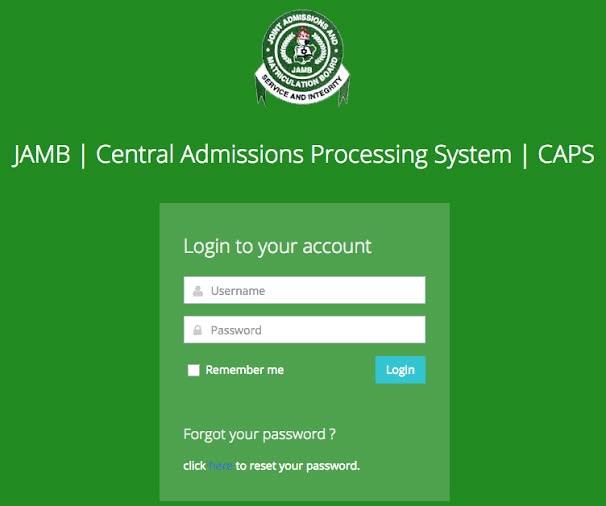
One of the most transformative interventions during his tenure was the strengthening of the Central Admissions Processing System (CAPS). Designed to digitise and centralise admission processes, CAPS addressed long-standing concerns around opacity and backdoor admissions in tertiary institutions.
Through CAPS, candidates gained the ability to monitor their admission status in real time, while institutions were compelled to align admissions with defined quotas, merit considerations, and regulatory guidelines.
Though not without operational bottlenecks, the system significantly reduced discretionary manipulation and introduced a more structured, traceable admission framework. In many ways, CAPS redefined how admissions are conducted in Nigeria’s tertiary education ecosystem.
Financial Discipline and Institutional Accountability
Perhaps one of the most defining features of Oloyede’s stewardship has been JAMB’s improved financial transparency.
Under his leadership, the Board became widely recognised for tighter financial controls, reduced leakages, and improved efficiency in revenue management. Through digitisation and stricter oversight mechanisms, JAMB reportedly generated substantial operating surpluses, including over ₦6 billion remitted to the Federal Government in 2024.
For an agency not primarily designed as a revenue-generating institution, this performance became a reference point in discussions about public sector accountability and prudent financial management.
Download the EXAMGUIDE UTME CBT PRACTICE APP today. Practise with real past questions, simulate the JAMB CBT environment, and enter that exam hall genuinely ready.
The Fight Against Examination Malpractice
Oloyede’s administration also intensified the war against examination malpractice through a combination of technology and enforcement.
Biometric verification systems, particularly fingerprint authentication, were strengthened and strictly enforced during registration and examinations. CBT centres were subjected to more rigorous monitoring, with those found violating standards sanctioned or blacklisted.
These measures reduced impersonation and coordinated malpractice networks, shifting the focus of UTME performance more firmly toward individual merit.
While malpractice was not eliminated, its scale and sophistication were significantly curtailed.
Digital Transformation and Service Delivery
Beyond examinations and admissions, JAMB under Oloyede embraced a broader digital transformation agenda.
Candidate registration, result checking, profile management, and admission tracking all became increasingly digitised. This reduced physical bottlenecks, improved accessibility for candidates across urban and rural areas, and streamlined JAMB’s operational workflow.
In effect, the Board transitioned into a more technology-driven institution with improved service delivery capacity and reduced bureaucratic friction.
Challenges and Criticisms Along the Way
Despite the achievements, the journey was not without setbacks.
Occasional technical glitches during examinations, ranging from server downtimes to login delays and system crashes, periodically disrupted candidates’ experience. Some CBT centres also struggled with infrastructure and connectivity challenges, raising concerns about consistency in nationwide implementation.
Similarly, while CAPS improved transparency, stakeholders occasionally raised concerns about delayed admissions and compliance challenges among some institutions. These issues reflected not just system limitations, but also broader structural constraints within Nigeria’s tertiary education framework.
Pass in one sitting. Score competitively. Begin now.
Study smart with ExamGuide UTME CBT Practice App. Visit www.examguide.com/offline/products/utme to download.
A Legacy of Reform, Not Perfection
As his tenure winds down, Oloyede’s leadership record is best understood not as a flawless system but as a sustained reform agenda that consistently pushed JAMB toward greater credibility, transparency, and efficiency.
The institution he is leaving behind is markedly different from the one he inherited, more digital, more accountable, and more structured in its processes.
His tenure demonstrates a key lesson often overlooked in public administration: meaningful reform is incremental, and institutional change is built through consistency rather than disruption alone.
Lastly, as JAMB prepares for leadership transition, the task ahead is not to reinvent the system, but to consolidate and refine it.
The incoming leadership will inherit a more digitised, more transparent, and more accountable institution, but also one that still requires technical strengthening, infrastructure upgrades, and continuous process improvement.
In the broader context of Nigeria’s public sector reform journey, Oloyede’s decade at JAMB stands as an example of how disciplined leadership can reshape institutional culture over time.
Not perfect, but impactful. Not without flaws, but undeniably transformative.
And as he exits the stage, the real question is not just what he achieved, but whether the system he built will be sustained, strengthened, or slowly undone.
No comment found
Related Posts

What Happens After Writing JAMB UTME? A Complete Guide from UTME Result to Admission

JAMB English Topics: How to Prepare for JAMB UTME English
How JAMB CAPS Works: A Step-by-Step Guide to Accepting Your Admission Offer

JAMB Says "Old O’Level Uploads Remain Valid", Clarifies New Verification Method

JAMB Candidates Can Now Verify O'Level Results from Home